Showing posts with label OSR. Show all posts

Wednesday, 7 December 2016

Mini Review: Broodmother Skyfortress


Broodmother Skyfortress

Author: Jeff Rients
Publisher: Lamentations of the Flame Princess
Buy: PDF // Book + PDF Combo

TL;DR: 

*Buy this if you like your fantasy à la Jack Vance weirdness and like lots of tables and GM advice.

*Do not buy this if elephant/shark combos are too weird for your boring elves & dwarves setting.

Overview:

Basically a big, floating, cloudy fortress that was created by some gods/other insanely powerful beings but is now inhabited by dumb Shark/Elephant monstaz who wreak havoc on your campaign world; they're powerful and will probably kill everyone, but why not visit anyway?

The latter half is dedicated to reproducing 'best of's from Jeff's blog. These are mainly random tables and GM advice, which in sum is solid. 

Thoughts:

I had a bit of publisher credit on DrivethruRPG so I bought this because I liked the look of it and was not immune to the G+ hypemachine (though I have been strangely ambivalent lately). I've been playing a lot recently (OD&D, Warriors of the Red Planet/Numenera, Tombstone, Savage Worlds Fallout), but not writing a lot on here, mainly because I haven't been that inspired and also because I have a shit-ton of academic writing to complete; but this book forced me from my blogging-hibernation.

Serendipitously, this 'adventure' – while excellent in its own right – may be one of the very best Game Master how-to introductions on the market. It is very simply presented, is immensely user-friendly and conversational, even funny at times, and is filled with encouraging exhortations for the new Game Master. You won't find arduous theoretical pontifications on the three conceptual pillars of role-playing adventure, or platitudinous advice for 'storytellers' here. Instead, there is simple (sometimes single sentence) advice that is not only concrete but practical. This part of the work is stellar.

There are also plenty of interesting adventure options. One dubiousness I felt before reading through it was whether the shark/elephant thing was just being weird for the sake of it – as in 'hey, wouldn't it be cool if like, there were these shark-headed elephant giant dudes, and whoa, wouldn't that be super creative and original?' – and therefore a bit kitsch (not in a good way). The answer to that is 'no: it is not kitsch'. The whole conceit of the background has been well integrated and is logical albeit bizarre (in a good way). It kind of reminds me of Jack Vance weirdness. Fucking strange to the point of being comical, but weirdly makes sense. Besides, Rients offers advice to re-skin the monsters, presenting some interesting counter-ideas. By the end of it, however, I was pretty enthralled with the original premise and would definitely run it that way if I ever get the chance.

I like that it would fit pretty well with the flavour/weirdness of my OD&D campaign. The other thing I like about it is it goes beyond the rote 'this-is-how-to-run-my-adventure' thing that a lot of products do and encourages the reader to get their hands dirty and make the thing work for them. While this is not at all anomalous of OSR products generally, I find that sometimes the sparseness or ambiguity of certain products breeds equal frustration as to being overwhelmed with a wall of text: what do I do with this? Thankfully, Broodmother Skyfortress takes a very pleasing middle-ground. The prose does not get bogged down in minutia, but instead relates all the pertinent facts and even additional options, then gets out of the way. The artwork and layout cannot be faulted: I really dig it.

Conclusion:
All in all, this is one of the better adventure/supplements on the RPG market currently. Publisher James Raggi's sales blurb claims:

"Since the invention of the adventure module, there have only been five adventures that were rated the most awesome...Broodmother Sky Fortress leaves them all behind.Your game won’t suck anymore! Broodmother SkyFortress: Buying any other adventure is just throwing your money away."

Although obviously being cheeky, I don't actually think he is too far off the mark: (1) Broodmother Skyfortress is very awesome; (2) Your game will certainly improve if you use Rient's advice; (3) if we are making comparisons here, buying other adventures opens the door to the very real possibility of being disappointed – it is that good.

This is probably my first review where I don't have any critiques. What's more is that I want to run this thing immediately, pretty much as written: that is always my internal barometer of whether a product is any good. Many plant seeds of ideas, but few inspire me to follow them more or less as written: this is both due to the time it takes to digest someone else's work and the often potentiality, though not the execution, of interesting ideas that could be taken further. This adventure – let's just call it a supplement – surpasses all those caveats. Have I said it is good? 


Friday, 3 June 2016

Black Hack Test Run

The Black Hack – Fiendish Almanac Blog


For some Friday night fun I thought I would test out The Black Hack as "by the book" as possible. I'm considering using it for a one-shot this weekend, so to familiarise myself with the rules I rolled up four characters (one of each class) and ran a solo encounter against a "carrion creeper" and a "grizzly bear". 

Rolling up the characters...

As The Black Hack claims to take inspiration from the "Original 1970s [...] game", which I assumed to be OD&D, I was interested to see how it fared by way of character creation. I got out my 3d6 and began rolling. Character generation is amazingly close to the 3 little brown booklet process in both flavour and experience. It is certainly as quick, if not quicker, than the original game. I intended to test drive the four core classes: warrior, cleric, thief, conjurer.

The first character I rolled, a conjurer, had no stats above 15 and it ended up being a straight down the line character. As both intelligence and charisma were high, I thought the scores were appropriate for an enigmatic conjurer. It was 3d6 down the line for the cleric too. The warrior, however, had 16 in one attribute, while the thief was so shitty that I had to swap a few scores around – by the rules you can swap up to two – to make it a feasible character. I have seen some people whinging online about the mandatory 2d6+2 roll if the previous score is 15+. Honestly, it makes sense from a mechanical perspective and I didn't feel like it crippled the character particularly. Plus, here's a little secret: you don't have to play by the rules as written.

Anyway, the whole process was super easy. I had read through the booklet once or twice before today, so I was fairly familiar with the rules. Nevertheless, creating four characters can't have taken longer than thirty minutes. I do have a quibble with the "incomplete" nature of the equipment list. Certain items are listed very granularly, like armour, shields, and even herbs, but no weapons are given prices (besides arrows and two-handed weapons). This is kind of annoying and the referee is left to devise their own prices for weapons. Unlike OD&D, armour is especially expensive in The Black Hack, so one assumes that weapons would be too. I went with a quick and dirty house rule that all one-handed weapons are 25 gp if a two-handed weapon is 50 gp. The nature of thieves tools appear to be pretty vague too. I made the assumption that thieves require them to do any of their general thieveries. That quibble aside, making characters was fun. I even rolled all the beginning spells randomly using 1d5 and 1d6 to determine which spells the conjurer and cleric received. I immediately noticed that characters tend to be tougher than a white box game would usually permit. All characters have a higher hit point range and the conjurer and cleric have a high chance to be able to recast memorised spells if their intelligence/wisdom is respectively high. There is a larger range of known beginning spells too. Let me introduce the party:

Conjurer:
Hit Points: 8
Strength: 5
Dexterity: 10
Con: 6
Intelligence: 13
Wisdom: 12
Charisma: 13

Items: 
Sword (1d4 damage), backpack, oil x2, lantern, torches x6, rations, flint & steel, wineskin, 1 gp.

Spells: 
1st – Sleep, magic missile, charm, detect magic
2nd – Darkness, levitate

Warrior:
Hit Points: 13
Strength: 16
Dexterity: 12
Con: 9
Intelligence: 10
Wisdom: 9
Charisma: 11

Items: 
Gambeson (2 AP), sword (1d8 damage), bow, arrows x10.

Cleric:
Hit Points: 9
Strength: 14
Dexterity: 12
Con: 9
Intelligence: 10
Wisdom: 15
Charisma: 7

Items: 
Gambeson (2 AP), small shield (2 AP), club (1d6 damage), 45 gp.

Spells: 
1st – Light, detect evil
2nd – Speak with animals

Thief:
Hit Points: 9
Strength: 12
Dexterity: 12
Con: 6
Intelligence: 11
Wisdom: 6
Charisma: 11

Items: 
Gambeson (2 AP), bow (1d6 damage), arrows x10, thieves tools.


The Black Hack Playtest – Fiendish Almanac Blog


Three encounters...

To create a fair evaluation of the system I decided I would run at least three encounters. The first was the party against a 1 HD "carrion creeper" (smaller cousin to the carrion crawler?). It took a few skims of the book to work out how initiative and combat actually worked during play, but once I got the hang of things it was pretty intuitive. I immediately liked the initiative system. It was easy and seemed to flow. It's a bit different from how I normally do initiative – I basically use B/X – but it worked well. It appears that there is a single initiative roll per character, per encounter, rather than the round-by-round initiative system of earlier games. The pregen characters absolutely annihilated the carrion creeper. Surprisingly all the characters succeeded in their dexterity checks and gained the initiative before the crawler could act. The thief backstabbed it and the warrior chopped it to bits in a single round, before the cleric or conjurer could even get to it. I decided to pit them against something a bit stronger. I looked at the ogre and even fleetingly thought it would be funny to throw them at the mercy of a demon, until I saw the grizzly bear. On paper it seemed like a good challenge but doable for four 1st level characters. 

In the first run through, the thief won initiative, but everyone else failed their checks. The thief attempted to backstab but missed (the sneak check succeeded but not the attack roll). The grizzly bear retaliated and got the thief pretty good. I forgot that the thief was using a bow, and wouldn't necessarily have been in melee range; I guess that the thief can "backstab" with a bow? The warriors and the cleric both took hacks at the bear but missed, while the conjurer cast a sleep spell. The spell would have sent the bear to dreamland, though I did forget to offer the bear a saving throw; or rather, I forgot to offer the conjurer an intelligence check to determine the spell's efficacy. I did remember to test whether the spell had expended a slot and rolled an intelligence check for the conjurer, who passed, meaning the conjurer could cast sleep again that day. I assumed at this point that the characters would have made mincemeat of the bear once it was asleep.

I ran the same encounter a second time but decided that for whatever reason the conjurer wouldn't use sleep. The bear, as a "powerful opponent", easily bypassed character defences, while the characters made some unfortunately high rolls during their attacks (remember low is better). The cleric, for instance, missed all but one of his attacks! Finally, the encounter was over with the thief crippled (-2 strength) and the fighter disfigured (charisma reduced to 4). Both had been forced "out of action" – or effectively killed – by the bear. That was one tough ursine!

Well, that was fun..

Overall I thought the system was very streamlined and efficient. On paper I wondered how the game would flow, but it was very intuitive once I had clarified the quirks of the game. The "powerful opponents" rule made a HUGE difference. Without this rule I think the system would be pretty skewed. Obviously I cannot comment on how higher levels play out, particularly once some magic items are discovered, but I would definitely play The Black Hack again. The rules are perfectly short. All the essential elements that I like from OD&D are there. It left me excited because the rules lite nature allows prep time to be maximised, allowing focus on campaign details rather than stat blocks. 


Thursday, 12 May 2016

The Black Hack: Mini Review for a Mini Game


PDF: $2.00
Physical: £4.00+

Over the past few weeks my G+ feed has been raging about David Black's new game The Black Hack. "I don't need another system or clone", I told myself, "the hype will die down". But then I kept hearing good things and realised I had some publisher's credit on DriveThru RPG. The price-tag for the PDF is only $2.00, so I thought, "why the hell not?". I downloaded the PDF and began reading. It is only 20 pages long, which is astonishingly short for an entire system. I was immediately impressed.

The Black Hack is an innovative RPG publication. It reconceptualises Dungeons & Dragons, distilling it to its rawest essence, while offering some inspired rules variants. At times the simplicity threw me: "this can't be it?". But it is. I think the minimalism would put some people off, the spartan style is not for everyone. Those new to the hobby – those learning the game for the first time – might, I imagine, find the esoteric nature of the The Black Hack ruleset problematic. The writing implies that the reader has prior experiences with role-playing games. Having said that, it would be an excellent option for teaching the game to new players (assuming the GM has prior experience). Reading through the booklet makes me want to run a game. It is simple, elegant, and improves some of the flaws of D&D without forsaking what makes the game great. It would also be useful as an options booklet for existing systems. I could imagine using the torch/rations/ammunition rules in any edition of D&D: it's easier than the traditional way of doing things. If you are looking for an ultra rule-lite RPG, this is a great purchase. 

Buy it: if you like rules-lite systems.
Avoid it: if you froth over Runequest or Pathfinder. 

Sunday, 24 January 2016

Review: Wormskin No. 1

Wormskin No. 1 (Autumn 2015)

Author: Norman & Gorgonmilk
System: Labyrinth Lord (or similar)
PDF/Print: $3.00 / $5.75

It has been a solid three months since I last posted anything. Nonetheless, I have been busy on a number of projects, both gaming related and otherwise. It is shaping up to be a good year.

Before Wormskin was released I remember +The Real-ish Greg Gorgonmilk posting some compelling WIP shots of the cover and interior maps. That, combined with the professed tone and inspiration of the work — folklore and the fairy tale — sustained my curiosity. Consequently, when it was released recently as a print-on-demand product I decided to purchase the first issue of the zine.

The back cover of Wormskin ostensibly claims to explore:

"...the mythic forest called Dolmenwood, a setting for use with B/X campaigns or similar tabletop systems. Each issue will look at various elements of this eldritch realm situated on the leafy verges of Faerie, where austere Drunes rub elbows with weird elf-lords and talking beasts, where witches wander skyclad and armed with sinister magicks to bind the spirits of hapless adventurers. Be wary."

While in a very abstract sense this is true, much of the 41 pages are dedicated to two new race-as-classes (Moss Dwarf and Grimalkin), detailing thirty variety of fungi within Dolmenwood, and presenting a new monster. There is a two-page map of the area, but it scarcely describes anything canonical of the actual setting — "Drunes", "weird elf-lords", or indeed anything much about the kingdoms or environs within the setting. Personally I would like to see more of the pages of future issues dedicated to exploring this very thing.

With that quibble confessed let me tell you about the things that Wormskin does well. While the text may not explicitly say a whole lot about the setting of Dolmenwood it does imply a lot through the articles within the zine. Overall I appreciated the mood; it fits well with the assumptions of my own campaign world, and there was enough within its 41 pages that I can borrow or transplant to the gaming table.

The zine is attractively presented; Gorgonmilk (I presume) has managed to curate the content in an attractive and legible manner. The (public domain?) illustrations fit the theme of Dolmenwood and +Matthew Adams provides a number of pieces, quintessential of his offbeat and slightly creepy style. Andrew Walter is credited with a coloured piece of the moss dwarf which I really enjoyed. The whole work is latticed with small decorative flourishes, like pictures of 'shrooms and the occult-inspired title page.

The contents provide a reasonable bang for buck. The moss dwarf is an interesting class; I am unsure whether they would be better suited as an NPC (indeed, the "Moss Dwarf NPCs" table is rather inspired), but I can also imagine them being fun to play in a wilderness campaign. The Grimalkin class is imaginative too. It seems to draw upon a similar mythological antecedence to my own Werecat class, but fits within the implied assumptions of the Dolmenwood campaign very tidily. 

The section on fungi is an entertaining and practical addition because detailing specific flora is something I frequently overlook in my own milieux. Providing a wide selection of edible, poisonous, and psychotropic mushrooms adds a compelling layer of realism and richness to any world, and I will probably use this section more or less verbatim at the table. Within these three articles the reader catches glimpses of Dolmenwood: witches, woodsmen, poisoners, "demi-fey", "dank woods", and a relationship with the ephemeral Otherworld. As noted previously, this is something I would like to have seen developed more explicitly, or most certainly in future issues.

In sum, Wormskin is worth the money. Whether you are picking up the PDF or a physical copy, there will probably be something of interest if you enjoy new rules and a zine whose setting is seeped primarily in folklore and fable. 


Sunday, 13 September 2015

Review: Weird Adventures


Trey Causey's Weird Adventures is a work of wonder. I say this on a number of levels. Firstly, it is long. It makes me wonder how long it took to write such a voluminous and inspired piece (see what I did there?). Secondly, and perhaps most importantly, it is incredibly imaginative. I was somewhat cheeky and asked Trey for a copy of his Strange Stars for review. Trey not only obliged graciously, but actually suggested Weird Adventures may be more aligned with my predilections — hinting I review this instead.

At first I was not quite sure what he meant. Sure, I'm a fan of pulp tales. I like my 1930s weird fiction as much as the next nerd, but I didn't fully click on why I may enjoy Weird Adventures especially. Before delving into specifics, let me first identify what Weird Adventures most reminds me of: Deadlands Noir. Deadlands Noir is a Savage Worlds setting is based on a fictitious rendition of North America circa-1930 in an alternate future. Think hardboiled detectives in New Orleans and you're on the right track. It's pulpy. Weird Tales is highly suggestive of the same, yet extends this idea (in my opinion) much further.

Mechanically, there is little to suggest any particular system over another (the exception is the "Weird Menaces" section which I will discuss later). Rather than being problematic, this is instead a boon. One of my key gripes with Deadlands Noir was that it contains enough mechanical information to shoe-horn the reader into a particular conception of the setting, or an understanding of how a Deadlands Noir game could play out. Weird Adventures, by contrast, is purposefully broad and insinuating. It never quite locks the reader into a hard-and-fast "this is Weird Adventures". Rather, and fortuitously, it leaves a lot of things unsaid. I do not mean to suggest this book is devoid of assertive content, not at all, but the information and the ideas it does present are like adventure hooks rather than stat blocks. See the difference? One gets the imagination fired up, allowing linkages between your own game and the piece you are reading. The other tells you the system you'll be using, and how a particular scenario may go down.

By and large, Weird Adventures proposes an alternative reality to our own. It is kind-of Europe, and kind-of Africa, and kind-of America, but it's also not. It hints at a world-shaking event, containing enough catastrophe and apocalypse to dismember our "real" world, while retaining identifiable semblances to our own reality. The mood of Weird Adventures is successfully reflective of the various pulp tales I have read. It contains excitement, adventure, notions of "other", malevolent forces, turbaned sikhs, weird dimensions, and the astonishment and over-the-topness of every good pulp tale. Other prevalent themes throughout Weird Adventures include: progress, technology, innovation, sexuality, bureaucracy, the optimistic booming of economy, mysticism versus thaumaturgy (intuited magic versus applied magic), planes and the supernatural. In this sense it successfully melds the tropes of sword & sorcery (and therefore D&D) with the "real world" — albeit in a fictitious time period some 70-80 years past. It taps into the collective unconscious of the pulp tales: the economic concerns of the depression, the devastating effects of the Civil and World Wars, the proto-future and golden age of the Art Deco era, the unsuppressed optimism and faith in industry, mass production, consumerism, and finally, the ideals of Fordism. 

But why is this important or desirable? Serious gamers who inject cultural- or self-examination and retrospection into their games will surely enjoy the ability to navigate these themes within a unified game world. By contrast, those who prefer the frivolity and entertainment of role-playing games — the murderhobosim, misadventure, excitement, and the ability to roll some dice with friends — will enjoy the potential of this setting. It is the sort of location, that while making suggestions, invites and stimulates the imagination. It gets me thinking: "That's cool, but imagine if I..." or: "Whoa. If I changed that organisation into a cult, and this city was situated here...".

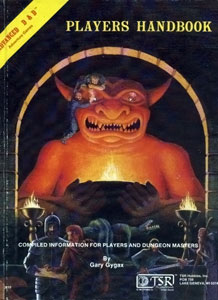
Causey maintains the pulpy vibes throughout the book, extending to the visual nature of Weird Adventures. He has (presumably) commissioned artwork for this setting, and it matches the appeal of the setting perfectly. Public domain artwork has been used, which I've repeatedly discussed my own disliking of. Like Dark Albion however, I think this is entirely topical and appropriate. In fact, except in a few instances, I could not determine which art was public domain, and which was commissioned. At times there were some slight visual inconsistencies — the style of the maps contrasted with certain illustrations, or two "menaces" were composed by different artists. The layout, the organisation, and the aesthetic was all purposeful and effective. The cover is reminiscent of the iconic demon statue painted on the Advanced Dungeons & Dragons Players Handbook, yet could just as easily be found in an Indiana Jones-esque tomb. 

"Weird Menaces" is a section relegated to the end portion of the book. It describes "fearsome creatures and strange encounters" within the Weird Adventures paradigm. This portion is really the only section which presumes the reader will be using one type of gaming system over another. By implication, a vintage edition of D&D or a comparable retroclone is assumed. This may be limiting to some readers, especially those expecting a d20-type write up. For most of the readership however, I think this decision will match their expectations.

I do not have anything negative to say about Weird Adventures. I was pleasantly surprised by how much I enjoyed it. That said, there was one small issue worth mentioning for prospective buyers. At times certain wordings or coined expression, unique to the setting, became detractive. As in Strange Stars, Causey makes no hesitations injecting his own unique vernacular into the setting. In principle I have no issue with this (quite the contrary). However, at times these peculiarities could be clandestine or obfuscating.

Anyone with a love of pulp fiction/fantasy would not go amiss by obtaining a copy of Weird Adventures. It's an inspiring piece, brimming with fun ideas. Because I'm in the middle of a Savage Worlds campaign, I can see how nicely Weird Adventures would work as a standalone setting for an alt-reality pulp game, or in conjunction with Deadlands Noir. Those running fantasy games will probably find something useful about this work too: maybe the characters are switched to another dimension and end up in the Weird Adventures milieu. Otherwise, there are new monsters (or "menaces") to be pilfered for existing fantasy campaigns. Those with a strict adherence to one genre or another may not find the pastiche of ideas to their tastes; it gathers ideas broadly. Me? I like it. Trey Causey's Weird Adventures gets a big thumbs up. I highly recommend it, not only for its applicability, but also as an interesting narrative. Sure, many of the ideas have been purveyed from other literature, but Causey is original in his interpretation, amalgamation, and expansion of these ideas, creating something unique and fun in the process. 

Tuesday, 8 September 2015

Astonishing Swordsmen & Sorcerers of Hyperborea Adventures

In my inbox today, were links to the three ASSH adventures from the recent Kickstarter. I have pledged for the physical copies, but it was nice to take a peek at the digital versions. The titles include Beneath the Comet by Ben Ball, Ghost Ship of the Desert Dunes by the master himself — +Jeff Talanian, and Forgotten Fane of the Coiled Goddess by +Joe Salvador. This is not a "review" per se, because I have not spent sufficient time to make any weighted or informed comment about the adventures, but I will say that first impressions matter. These adventures are all beautifully presented, and exceedingly topical to Jeff's Hyperborean setting. +MonkeyBlood Design have provided some excellent cartography, and the ink and colour work of Jonathan and Daisy Bingham is very distinctive. I like that each adventure expands on the core setting in their own way, presenting additional perspectives and intrigue to an already flavourful milieu (particularly the eastern slanting of Joe's Forgotten Fane adventure). While I really enjoyed running Jeff's previous offerings — Rats in the Walls and Charnel Crypt of the Sightless Serpent — these new adventures feel distinctively more ASSH. What do I mean by this? I mean the brand and the setting seems to have come of age. Both previous adventures had the grimdark grittiness of Jeff's Hyperborea, but these new adventures widen the scope and intention of the ASSH game into something greater and more diverse. Of course, these games can be run with your poison of choice (AD&D, S&W, OSRIC, whatever) but I feel like they provide a distinctive Hyperborean experience on their own. Pick one, or all, up from North Wind Adventures


Wednesday, 2 September 2015

OD&D Werecat Class

As I have previously stated, I am running an upcoming OD&D campaign using mainly White Box rules, and custom classes (if the players want something divergent).

Besides my recent Warlock class, another of my players requested a custom class: a wizard who could transform into a house cat. Developing this idea, further I present you with: The Werecat.

Available from my "Downloads" section, or by following this link HERE


Thursday, 27 August 2015

Dungeon Lord Zine "The First Issue"

Free stuff is awesome. +Taylor Frank is quite the magnanimous character, sending me a copy of his Dungeon Lord Zine.


Taylor Frank - Corey Ryan Walden Review

This thing is pretty awesome. I enjoy an abundance of colour; something you may have witnessed in my own offerings. The interior of this zine is printed on bright green paper, bearing an equally colourful (and pleasingly violent) cover. Although presented as being "compatible with DCC RPG", it is an ideal candidate for general idea-thievery. Okay yes, it's also suitable for DCC players too. The First Issue begins strongly — the interior cover has a one-page adventure.

The adventure is penned by Ron Yonks and is entitled Calcified Caves of the Slime Yeti. Mechanically it is very minimal — the sort of minimalism that endears me to the immediate possibilities. I'm totally going to throw this into my upcoming OD&D campaign as a side-jaunt. I'll change some things of course, but I could almost run it as written. 

The next page is the credits page. Mine came with a temporary tattoo (yes, you read correctly. I have some real ones, but the idea is still fun), and a hand-written note from Taylor. My copy is "damaged" and was thus free. It has some ink stains and a few rough edges. Taylor explains this, but elaborates that it is still a "good example of the issue". Yes it is Taylor, it's a very good example. I received a bunch of stuff from Stormlord Publishing this week, and comparatively they are very fastidious with their workmanship. However, I really appreciated the from-me-to-you aesthetic of Taylor's zine. It's homely, and I think that makes it inviting. If I spill coffee on it I won't really care, but that's how game materials should be used. I have a lot of stuff on my bookshelf that I'm overly careful with because it's effectively too "nice" to use. Dungeon Lord begs you to use it. I will.

The bulk of the zine is comprised of an adventure: "The Caves of the Sacred Seven". I can't be bothered explaining the plot, but it was a nice balance between "ecological" (or sensical) and gonzo. Again, I'll probably use some/all/bits of this in my OD&D campaign. It makes an interesting locale for adventure, with the possibility of finding some nice magic items. It has cavemen, reptilians, dinosaurs, transmuting corridors, "wild men", psychedelic spores, and a "hovel". My kind of adventure. Some bits are slightly silly or not quite my bent, but the basic structure is definitely pleasing. The Caves of the Sacred Seven is fairly basic in execution, providing enough detail to run, but not too much. The reader does not become bogged down when attempting to run it "correctly". It isn't long, and it isn't short. The remainder of the zine varies in usefulness: I didn't like The Tomb of Zarfulgar the Lost (another adventure), but I appreciated the simple (if slightly bland) blank dungeon on the back cover, the historical account of this zine's inception, and the "Random Dungeons Elevation" generator. One page of the zine was a poem, which I was decidedly ambivalent about. It wasn't horrible, more of a page filler. 

Conceptually, I want to discuss two things that particularly impressed me about this issue/zine. The first is the artwork. No one could accuse this zine of an enormous budget for commissioned art, but that is the beauty of it. It reminds me of Gygax and Arneson's earliest D&D efforts, and I mean that as a huge compliment. It is effortless, and is not pretentious. What you see is what you get. There are no gimmicks; nothing to hide behind. The content is either good, or it's shit. And like Gygax and Arneson's first efforts, it invites you to take part. This idea segues nicely into my second point, which is that Taylor actually explicitly asks you to take part. The zine's introduction attributes inspiration to "everyone who ever experienced the joy of fantasy role-playing in such a profound way that the urge to create overcame them." It asks the reader to, in turn, become inspired and "make something of your own."

The cynical reader may be laughing at me for my sentimentality (that's actually a word), but I like it. The DIY scene needs more inclusiveness and encouragement.Taylor seems to champion this idea. Most days, when I scroll down my G+ feed, there will be some kind of negativity about certain subcultural factions of the wider OSR community. That's a normal part of being human, but I find the positivity of this zine (and its creator) extremely refreshing.


Anyway, this thing has my vote. Seriously, in terms of page count and cost, Dungeon Lord punches far above its weight. I've paid $40 for supplements I've liked less, and with much larger budgets. Maybe the best things in life are free. 

Wednesday, 26 August 2015

OD&D Warlock

One of my players requested a warlock class for my upcoming OD&D campaign. For anyone interested, it can be downloaded from HERE


Friday, 21 August 2015

What the Shelf?

Corey Ryan Walden

My RPG collection is not particularly large. My wife and I have very limited space. For the past three years we've lived in a one-bedroom apartment, necessitating some conscious choices about what stays on my gaming shelf. My collection is not particularly unique; I have no "collectible" items. As much as I'd like a Woodgrain OD&D box set, I don't see that happening any time soon. Regardless, I am really grateful for my collection. What follows is my top 5 list of indispensable products. In other words, my stranded-on-a-deserted-island list.

5. Astonishing Swordsmen & Sorcerers of Hyperborea 
For about six months I scrimped and saved to afford the box set (and the equally expensive shipping costs to the bottomless void at the end of the world). It was the cover artwork and the interesting name that initially attracted me. It was very evocative of an importantly divergent D&D setting. This game pushed me to finally read H.P Lovecraft, R.E Howard, and C.A Smith's literature. Sure, it had been on the reading list for awhile, but it came at the right time. I love the Hyperborean setting, and the medley of dark sword & sorcery inspirations. It's a great game, and I have nothing but respect for Jeff Talanian. If you do not own this game, at least grab the PDFs.


4. Basic Set (Moldvay)
This one has to be included here. When introducing new players, I find this is my go-to edition. It's essentially OD&D but with tighter/more coherent rules. I love it. You can play it with a d20 and a handful of d6s, or throw in alternate weapon damage. It's readily adaptable, and I love the Erol Otus cover artwork. Plus, it doesn't get much better than a 30-odd page rulebook!


3. T1 - The Village of Hommlet (Gygax)
This adventure is iconic not only for me personally, but for a lot of people. I first played through this module with 3rd edition rules, but it was still distinctively old school. It has giant frogs that WILL kill half the party, bandits, cults, a dungeon, Gygax's signature "friendly" NPC who is really going to murder you in your sleep. What's not to like? 


2. AD&D (1st Edition)
This was my very first D&D experience. Although it was not the "current" edition of the day (3rd edition was), there was something about the lo-fi vibe that had me both terrified and tantalised. I had about 3 characters die in the space of as many hours. But rolling those weird dice, being absolutely confused by all the odd mathematics, and never knowing whether death was around the corner had me instantly addicted. I've kind of cheated here because I've included all three core books, but you need them all, right?


1. OD&D (Wizards Reprint)
Up until a year ago I had never played this edition of D&D. I read some shitty scan off the internet before I bought this, and was impressed with how you really can boil D&D down to some very simple elements. I wrote The Black Ruins in an afternoon, using bullet points for all the encounters, and ran it the same day. It worked, and it worked well. The system gets out of the way, and the play takes over. This is the quintessential DIY edition. Play a vampire if you like, just as long as it begins "relatively weak" and works its way "up to the top". Unlike some of the more complex editions of D&D I find this edition so esoteric you cannot help but begin tweaking with it. Making new classes/races/spells/items/monsters is a breeze. I liked that the Wizards reprints threw in most of the additional supplements, but I really appreciate the 3 little brown booklets. 


Bonus Contenders!
Here are 5 extras that fit outside my strict top 5, but are among my favourites:


5. A Red & Pleasant Land (Smith)
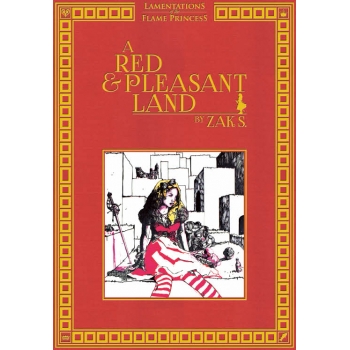
If you have any inkling of OSR stuff you probably know about this one already. Great artwork, great ideas. From my own experiences it's not hugely functional (I've only used the random items table within a game), but it's an exceptional blueprint for how malleable D&D can be. This book is "art" in the sense that it challenges the reader beyond their assumptions of creating and running a game. It is indirectly an instruction manual of how to take your games further. My first encounter with it had me going: "Huh...I never thought of that." Ever since, I've been telling myself to think outside the box more. 


4. Yoon-Suin (McGrogan)
This, along with A Red & Pleasant Land is inspirational reading. This setting is laden with tables, and in this sense it is very functional, but again, it challenges me to push the creative envelope with my own endeavours. I doubt I'll ever run a Yoon-Suin campaign, but I may plug it into a game somewhere, or use the adventure generators. More than anything, I just love reading the thing. I'm a huge sucker for Matthew Adams' artwork. Plus slug men. 


3. Fever-Dreaming Marlinko (Kutalik)
I play in Chris' G+ campaign so I am a bit biased. But before I knew Chris, I was a fan of the Hill Cantons material. The Hill Cantons Compendium and Slumbering Ursine Dunes are good, but this is Chris' current masterpiece in my opinion. It's short, sweet, and is accurately reflective of how hilarious playing in a Hill Cantons game is. The Slavic influences in his work, as well as his (warped*) imagination/sense of humour are the strong points of this booklet, making it something pretty unique.


2. Gary Gygax's Necropolis
Okay. I ran this badboy around 2003/2004. We played it every weekend for a good six months. There was character death aplenty, horrible traps, terrifying monsters, tricks, traps, the works. This is one of my all time favourite adventures. It's about time I ran it again. 


1. Judges Guild Ready Ref Sheets
A very useful set of tools to use with OD&D. Full of vintage vibes, and typewritten amateurism. I like random tables.


So there you go. That's my list. What's yours?

*Describing someone as "warped" in this context is a huge compliment. 


Thursday, 20 August 2015

OD&D Conversion


We wrapped up my Astonishing Swordsman & Sorcerers of Hyperborea campaign last night. Perhaps fittingly it was a TPK. A horde of undead overbore the party, and after a cleric-less battle of valorous proportions everyone was dead. Being aware it was the final session, the players decided to fight to the death (though I think they could have escaped if they wished).

After the session I asked the players their thoughts on the system. We've had a total of 14 sessions by my count, which I think is a decent amount to get a handle on a system. People were generally positive with the experience. The two phase combat has been difficult for me to get my head around (practically speaking) and I think this translated in the sessions. Also the descending armour class was different from the games we grew up on (but something I am personally very familiar with). Unsurprisingly, these were the things which were mentioned as downsides. The upsides were the deadliness of combat and the general mood. Let it be noted that the group played excellently throughout this campaign.

I am currently scheming an OD&D sandbox concept. The goal is open-ended exploration, rife with dungeons, cults, interesting wilderness spaces, odd races, spacemen, and everything else that makes a game of D&D fun. My approach is beginning with the White box. Over time I may add some details from the Greyhawk supplement, but for now I'll keep it super simple. Classes will be custom for the most part, though Fighting-Man, Cleric, and Magic-User will be defaults. Given the player feedback regarding descending armour class, I converted the Men & Magic tables to an ascending system. I haven't fully decided whether I'll keep it traditional, or use ascending armour class. Part of me thinks it may be easier (for both me and the players) to use my conversion.

If you're interested check out my downloads page or click HERE

Print friendly version can be found HERE.

Example Page

I've attempted to keep the representations faithful to the originals - a literal translation. You'll notice I've created a table which extrapolates the attack bonuses for each level (and class). These are not "raw" because I have had to fill in progressions between say +1 and +3, making an executive decision on how those progressions are made. If you do not like the way I have interpreted this, simply use the preceding tables. In the interest of clarity I have also added the Saving Throws in a more readable format. Hope this is helpful!

Sunday, 16 August 2015

Praise for Tombstone

Writing can be a largely solitary (and at times, isolated) activity. My initial motivation for formally creating Tombstone was to produce a fun, simple Wild West I could play with my friends, and a rulebook with art I liked. Most of the time I create products which are received with little feedback. Here and there people may comment that they enjoy something, or that they'd like to try it, or compliment some aspect of what I have done.

I was feeling a little jaded last night, but I got this lovely email out of the blue:

"Hi Corey,

I just wanted to let you know that I downloaded your Tombstone alpha rules and printed out the book and read through it. I really like what you've done.  I've tried several of the wild west games out there (Coyote Trail, Shotguns and Saddles, Blood & Bullets, Boot Hill, Wild West Cinema, and others I am likely forgetting) but your game really works for me. I love the simplicity and how easy it is to add house rules to. I'm greatly looking forward to the finished product. I really like the game and can't wait to see it in the finished form. I liked it enough that I ordered the actual print book from lulu after we played. I think we are going to give it another go on Sunday.I'm even considering running this for my regular face to face group a week from Sunday. Keep up the great work!"

These little moments keep me motivated and inspired. Thank you!

Friday, 14 August 2015

OD&D + 0-Level Characters

A present to myself arrived on the doorstep today: the Dungeon Crawl Classics RPG. I will probably do a review of it at some point (what I've read so far is awesome), but one aspect that inspired me is the handling of 0-level characters. I like the idea of a dozen or so peasant mates banding together to explore a dungeon: 

*Hiccup!* "Barry, ai heard therz sum treshurez in this here dungin!" 

A few hours/days/weeks later most are dead. Shit, that escalated quickly.

Anyway, my Astonishing Swordsmen & Sorcerers mini-campaign is winding down. I'm running a published adventure at the moment, and my Xamboola adventure has been successfully playtested. I'm kind of itching for something different. Earlier this year I ran an OD&D one-shot which turned into The Black Ruins. I'm a huge fan of OD&D. Although I was born over a decade after its release, I adore the ruleset. It's simple, malleable, and includes all the bits of D&D that I like. The other day I drew a map of an imagined city called Styro which is basically...I don't know...it's weird. But the idea of a classless game - or at least a looser definition of class - has been sitting with me recently, and DCC's 0-level characters has got the juices going a bit further. I've been considering running an OD&D hexcrawl/megadungeon game, where characters start off as worthless peons, and through adventure begin to hone their skills further. Each character would begin at 0 level, and...


  • I'd probably use my Sandboxing tables to generate a prior profession, or use the DCC tables for ideas.
  • Begin with1d3 hit points. 
  • Gain a level at the conclusion of the first adventure and choose a class. Classes will be assumed to be fighting-man, cleric, or magic-user (probably human only). Additional class options are my OD&D Thief and Berserker (see my downloads section). Also, players can describe what sort of character they want, and I can create a template from that (I'm working on a Mentalist at the moment).
  • Instead of gaining another hit die, 1st level characters would then roll 1d6 for hit points. If the total exceeded their 0-level total, they keep the higher. Otherwise they gain 1 extra hit point. Thus, a 1st level character could have anywhere between 2-6 hit points.
Oh, and I'd get players to roll at least 2-4 characters. I've been mapping out the first level of the Styro underworld too. I'm kind of excited for where this eventuates. More to come.