Showing posts with label D&D. Show all posts

Wednesday, 7 December 2016

Mini Review: Broodmother Skyfortress


Broodmother Skyfortress

Author: Jeff Rients
Publisher: Lamentations of the Flame Princess
Buy: PDF // Book + PDF Combo

TL;DR: 

*Buy this if you like your fantasy à la Jack Vance weirdness and like lots of tables and GM advice.

*Do not buy this if elephant/shark combos are too weird for your boring elves & dwarves setting.

Overview:

Basically a big, floating, cloudy fortress that was created by some gods/other insanely powerful beings but is now inhabited by dumb Shark/Elephant monstaz who wreak havoc on your campaign world; they're powerful and will probably kill everyone, but why not visit anyway?

The latter half is dedicated to reproducing 'best of's from Jeff's blog. These are mainly random tables and GM advice, which in sum is solid. 

Thoughts:

I had a bit of publisher credit on DrivethruRPG so I bought this because I liked the look of it and was not immune to the G+ hypemachine (though I have been strangely ambivalent lately). I've been playing a lot recently (OD&D, Warriors of the Red Planet/Numenera, Tombstone, Savage Worlds Fallout), but not writing a lot on here, mainly because I haven't been that inspired and also because I have a shit-ton of academic writing to complete; but this book forced me from my blogging-hibernation.

Serendipitously, this 'adventure' – while excellent in its own right – may be one of the very best Game Master how-to introductions on the market. It is very simply presented, is immensely user-friendly and conversational, even funny at times, and is filled with encouraging exhortations for the new Game Master. You won't find arduous theoretical pontifications on the three conceptual pillars of role-playing adventure, or platitudinous advice for 'storytellers' here. Instead, there is simple (sometimes single sentence) advice that is not only concrete but practical. This part of the work is stellar.

There are also plenty of interesting adventure options. One dubiousness I felt before reading through it was whether the shark/elephant thing was just being weird for the sake of it – as in 'hey, wouldn't it be cool if like, there were these shark-headed elephant giant dudes, and whoa, wouldn't that be super creative and original?' – and therefore a bit kitsch (not in a good way). The answer to that is 'no: it is not kitsch'. The whole conceit of the background has been well integrated and is logical albeit bizarre (in a good way). It kind of reminds me of Jack Vance weirdness. Fucking strange to the point of being comical, but weirdly makes sense. Besides, Rients offers advice to re-skin the monsters, presenting some interesting counter-ideas. By the end of it, however, I was pretty enthralled with the original premise and would definitely run it that way if I ever get the chance.

I like that it would fit pretty well with the flavour/weirdness of my OD&D campaign. The other thing I like about it is it goes beyond the rote 'this-is-how-to-run-my-adventure' thing that a lot of products do and encourages the reader to get their hands dirty and make the thing work for them. While this is not at all anomalous of OSR products generally, I find that sometimes the sparseness or ambiguity of certain products breeds equal frustration as to being overwhelmed with a wall of text: what do I do with this? Thankfully, Broodmother Skyfortress takes a very pleasing middle-ground. The prose does not get bogged down in minutia, but instead relates all the pertinent facts and even additional options, then gets out of the way. The artwork and layout cannot be faulted: I really dig it.

Conclusion:
All in all, this is one of the better adventure/supplements on the RPG market currently. Publisher James Raggi's sales blurb claims:

"Since the invention of the adventure module, there have only been five adventures that were rated the most awesome...Broodmother Sky Fortress leaves them all behind.Your game won’t suck anymore! Broodmother SkyFortress: Buying any other adventure is just throwing your money away."

Although obviously being cheeky, I don't actually think he is too far off the mark: (1) Broodmother Skyfortress is very awesome; (2) Your game will certainly improve if you use Rient's advice; (3) if we are making comparisons here, buying other adventures opens the door to the very real possibility of being disappointed – it is that good.

This is probably my first review where I don't have any critiques. What's more is that I want to run this thing immediately, pretty much as written: that is always my internal barometer of whether a product is any good. Many plant seeds of ideas, but few inspire me to follow them more or less as written: this is both due to the time it takes to digest someone else's work and the often potentiality, though not the execution, of interesting ideas that could be taken further. This adventure – let's just call it a supplement – surpasses all those caveats. Have I said it is good? 


Thursday, 12 May 2016

The Black Hack: Mini Review for a Mini Game


PDF: $2.00
Physical: £4.00+

Over the past few weeks my G+ feed has been raging about David Black's new game The Black Hack. "I don't need another system or clone", I told myself, "the hype will die down". But then I kept hearing good things and realised I had some publisher's credit on DriveThru RPG. The price-tag for the PDF is only $2.00, so I thought, "why the hell not?". I downloaded the PDF and began reading. It is only 20 pages long, which is astonishingly short for an entire system. I was immediately impressed.

The Black Hack is an innovative RPG publication. It reconceptualises Dungeons & Dragons, distilling it to its rawest essence, while offering some inspired rules variants. At times the simplicity threw me: "this can't be it?". But it is. I think the minimalism would put some people off, the spartan style is not for everyone. Those new to the hobby – those learning the game for the first time – might, I imagine, find the esoteric nature of the The Black Hack ruleset problematic. The writing implies that the reader has prior experiences with role-playing games. Having said that, it would be an excellent option for teaching the game to new players (assuming the GM has prior experience). Reading through the booklet makes me want to run a game. It is simple, elegant, and improves some of the flaws of D&D without forsaking what makes the game great. It would also be useful as an options booklet for existing systems. I could imagine using the torch/rations/ammunition rules in any edition of D&D: it's easier than the traditional way of doing things. If you are looking for an ultra rule-lite RPG, this is a great purchase. 

Buy it: if you like rules-lite systems.
Avoid it: if you froth over Runequest or Pathfinder. 

Friday, 21 August 2015

What the Shelf?

Corey Ryan Walden

My RPG collection is not particularly large. My wife and I have very limited space. For the past three years we've lived in a one-bedroom apartment, necessitating some conscious choices about what stays on my gaming shelf. My collection is not particularly unique; I have no "collectible" items. As much as I'd like a Woodgrain OD&D box set, I don't see that happening any time soon. Regardless, I am really grateful for my collection. What follows is my top 5 list of indispensable products. In other words, my stranded-on-a-deserted-island list.

5. Astonishing Swordsmen & Sorcerers of Hyperborea 
For about six months I scrimped and saved to afford the box set (and the equally expensive shipping costs to the bottomless void at the end of the world). It was the cover artwork and the interesting name that initially attracted me. It was very evocative of an importantly divergent D&D setting. This game pushed me to finally read H.P Lovecraft, R.E Howard, and C.A Smith's literature. Sure, it had been on the reading list for awhile, but it came at the right time. I love the Hyperborean setting, and the medley of dark sword & sorcery inspirations. It's a great game, and I have nothing but respect for Jeff Talanian. If you do not own this game, at least grab the PDFs.


4. Basic Set (Moldvay)
This one has to be included here. When introducing new players, I find this is my go-to edition. It's essentially OD&D but with tighter/more coherent rules. I love it. You can play it with a d20 and a handful of d6s, or throw in alternate weapon damage. It's readily adaptable, and I love the Erol Otus cover artwork. Plus, it doesn't get much better than a 30-odd page rulebook!


3. T1 - The Village of Hommlet (Gygax)
This adventure is iconic not only for me personally, but for a lot of people. I first played through this module with 3rd edition rules, but it was still distinctively old school. It has giant frogs that WILL kill half the party, bandits, cults, a dungeon, Gygax's signature "friendly" NPC who is really going to murder you in your sleep. What's not to like? 


2. AD&D (1st Edition)
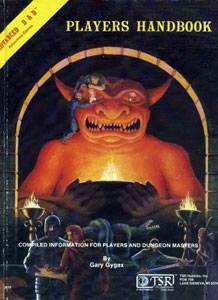
This was my very first D&D experience. Although it was not the "current" edition of the day (3rd edition was), there was something about the lo-fi vibe that had me both terrified and tantalised. I had about 3 characters die in the space of as many hours. But rolling those weird dice, being absolutely confused by all the odd mathematics, and never knowing whether death was around the corner had me instantly addicted. I've kind of cheated here because I've included all three core books, but you need them all, right?


1. OD&D (Wizards Reprint)
Up until a year ago I had never played this edition of D&D. I read some shitty scan off the internet before I bought this, and was impressed with how you really can boil D&D down to some very simple elements. I wrote The Black Ruins in an afternoon, using bullet points for all the encounters, and ran it the same day. It worked, and it worked well. The system gets out of the way, and the play takes over. This is the quintessential DIY edition. Play a vampire if you like, just as long as it begins "relatively weak" and works its way "up to the top". Unlike some of the more complex editions of D&D I find this edition so esoteric you cannot help but begin tweaking with it. Making new classes/races/spells/items/monsters is a breeze. I liked that the Wizards reprints threw in most of the additional supplements, but I really appreciate the 3 little brown booklets. 


Bonus Contenders!
Here are 5 extras that fit outside my strict top 5, but are among my favourites:


5. A Red & Pleasant Land (Smith)
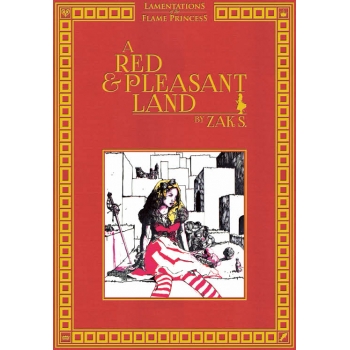
If you have any inkling of OSR stuff you probably know about this one already. Great artwork, great ideas. From my own experiences it's not hugely functional (I've only used the random items table within a game), but it's an exceptional blueprint for how malleable D&D can be. This book is "art" in the sense that it challenges the reader beyond their assumptions of creating and running a game. It is indirectly an instruction manual of how to take your games further. My first encounter with it had me going: "Huh...I never thought of that." Ever since, I've been telling myself to think outside the box more. 


4. Yoon-Suin (McGrogan)
This, along with A Red & Pleasant Land is inspirational reading. This setting is laden with tables, and in this sense it is very functional, but again, it challenges me to push the creative envelope with my own endeavours. I doubt I'll ever run a Yoon-Suin campaign, but I may plug it into a game somewhere, or use the adventure generators. More than anything, I just love reading the thing. I'm a huge sucker for Matthew Adams' artwork. Plus slug men. 


3. Fever-Dreaming Marlinko (Kutalik)
I play in Chris' G+ campaign so I am a bit biased. But before I knew Chris, I was a fan of the Hill Cantons material. The Hill Cantons Compendium and Slumbering Ursine Dunes are good, but this is Chris' current masterpiece in my opinion. It's short, sweet, and is accurately reflective of how hilarious playing in a Hill Cantons game is. The Slavic influences in his work, as well as his (warped*) imagination/sense of humour are the strong points of this booklet, making it something pretty unique.


2. Gary Gygax's Necropolis
Okay. I ran this badboy around 2003/2004. We played it every weekend for a good six months. There was character death aplenty, horrible traps, terrifying monsters, tricks, traps, the works. This is one of my all time favourite adventures. It's about time I ran it again. 


1. Judges Guild Ready Ref Sheets
A very useful set of tools to use with OD&D. Full of vintage vibes, and typewritten amateurism. I like random tables.


So there you go. That's my list. What's yours?

*Describing someone as "warped" in this context is a huge compliment. 


Monday, 3 August 2015

On "Character Builds"

Disclaimer: I don't give a monkey's banana how you play your game. I mean that sincerely. However...

The two words "Character Build" makes me cringe every time I hear them. This process of character creation has been described in both "official" and "unofficial" capacities, and it honestly perplexes me. Despite the fact I was weaned on 3rd edition (mainly), and I became well acquainted with poring over tables, dense paragraphs, and rules and options galore, I can't help but feel this term is misplaced. In a game in which death lingers around every darkened corner, it is preemptive to plan so far ahead to predict a character's distant fate. Is this not the role of the game itself to determine? 

The idea of "character build" makes way more sense in a video (or digital) game. Usually, death is as inconvenient as reloading from your last save, or as involved as retrieving your items from whence you were slain. By this mode of play, the idea of a "character build" is logical. By and large, the autonomy of a character's destiny is in the hands of the player. If they don't like how the computer...err computed...that last battle, just reload the game. Someone will invariably argue that video gamers are destroying the hobby and blah blah blah, but I would suggest the prevalence of min-maxing has been around since day one. This is evidenced in Gygax's distaste for some of the hobbyist hacks of the day, where umpteenth levels were not uncommon. Munchkinism right?

If you are a munchkin/min-maxer, all power to you. Then again, in a tabletop role-playing game — especially if you're playing a relatively high lethality system (like most OSR games) — I feel the idea of a character build puts an unfair burden on the DM. Why? Because when a player says "I'm going to have a 20th level x, who has taken x feat, and adds x amount to attacks and damage" the DM, in their role of "facilitating fun", is more likely to take this player predilection on board. A bias (and arguably a detractive one) occurs. The game becomes less free. 

I'm a huge fan of letting the dice fall in whatever random pattern they may. If this benefits the players, so be it. If it destroys my careful preparation, so be it. If a character dies, so be it. Even if I am a player, and my character dies because of a shitty die roll, I honestly couldn't care less. The merciless randomness of "chance" is more fair and exciting to me than any hyper-effort towards true game balance. One of my biggest attractions to D&D is the fact that real-life intelligence can be helpful. Yes, there is an arbitrariness to the whole thing. DM decision-making and the whims of the dice can be a cold fate to swallow, but a system that facilitates the immediate creation of a superhero is tediously boring. The game purposely involves dice. Surely, the game is meant to contain some level of randomness. If a purpose of a role-playing game is a (rather loose) simulation of reality, why would everything work in a player's favour? Characters will and should die. 

As a DM, I just want to run my game, and for it to be enjoyable. I don't want the nagging thought in the back of my mind that a player is expecting their character's inevitable specialness to shine through every session. If they're invested in the game, I believe that will happen by itself. I see that specialness every session when my players blow me away with their awesome ideas. For me, part of the fun of the game, is the notion that death could be around the corner, and if I want a level, or more gold, or an awesome sword, I need to legitimately "earn it". I can distinctly remember my least enjoyable games. They have usually involved a predetermined or unavoidable narrative path I (as the player) must follow, or the complete absence of real danger to my character. Let me know death is not only possible, it's probable.

For the record, I'm not going to pretend slaughtering a whole village of orcs is not fun, it is. But I like that powerful feeling to be interspersed with moments of terror and the imminent realisation that my character kind of sucks!


Sunday, 5 July 2015

Blueholme Prentice Rules: Review

Blueholme Prentice Rules - Michael Thomas // Corey Ryan Walden
Author: Michael Thomas 
Price: $0.00/$9.99 (DriveThruRPG/Dreamscape Design)
Format: PDF/Print
Page count: 57
System: Dreamscape Design

Year: 2014


I will be transparent: I do not own Dungens & Dragons Holmes (unless a PDF copy counts). Over the past two years the retro-allure has certainly tempted me. Ebay's nightmarish, and often extortive shipping prices to New Zealand have inevitably prevented this however. When +Michael Thomas released the Blueholme Prentice rules I was interested by the potential of this ruleset, particularly if it was rules-light and representative of Holmes. My personal dealings with Michael have been very positive - he is a nice guy, always willing to chat - and he was generous enough to mail me a physical copy for review (which doesn't often happen!). 

It should be apparent to anyone vaguely acquainted with my writing that I enjoy OD&D and B/X Basic. The freewheeling aspect of these editions is appealing; particularly the minimal preparation required, and the maximum potential for fun. Historically the Basic Set emerged with the purpose of introducing new players to the hobby, and going to some lengths to clarify the existing OD&D rules. Assuming Blueholme cleaves closely to the original Holmes rules (warranting a "retroclone" status), I expected a simple and transparent system, while being representative of the original texts.

The purpose of this review is not a study the minute similarities and differences between Holmes and Blueholme. Rather, the purpose is a subjective impression of the game as a standalone system. Of course, this review cannot help being informed by the primary inspiration of this system, so some comparison to Holmes will inevitably occur. 

The Good
I'm a sucker for a good cover. Undoubtedly one of the biggest appeals of Blueholme is the awesome cover art by Jean-Francois Beaulieu. It captures the essence of the Holmes set nicely with its iconic blue cover. The dragon is very reminiscent of the original, yet the whole piece is a satisfying homage without being a pedant to history. I've previously discussed my disdain for OSR products that are slavishly reminiscent of TSR's yesteryear. I like that the Blueholme cover deviates from tradition in a fun way. Its is not a kitsch or tacky try-hard attempt to invoke nostalgia, but the roots of inspiration are transparent. I will talk about the artwork later, but suffice to say, I adore the cover.

Blueholme's true strength is its vivid and crystalline presentation. The table of contents provide excellent oversight, fitting into a single page. The introduction is a brief synopsis of the booklet and welcomes the reader to dive right in. I cannot praise the simplicity and alacrity of writing enough. In my opinion it is very eloquent, forgoing many of the arduous textbook conventions of a role-playing game. Blueholme Prentice does not require mental exercise to grok the contents, to flick between pages with a confused frown, or to toil through pages of dry and uninspired text. 

These rules are designed to quickly consult amidst the flurry of an exciting game, rather than being an encyclopaedic reference work one is required to memorise with fastidious dedication. This is a workman's D&D. This is Blueholme's obvious appeal. Tables, charts, explanations and descriptions are executed with the mantra of concision and explication in mind. For this reason I eagerly anticipate the Blueholme Compleat rules. If Compleat is accessible as Prentice, I believe it will be an excellent edition. My proclivity and adoration for OD&D probably influences this belief somewhat!

Character creation is a simple process in Blueholme, representative of the ethos of early D&D. Thomas has designed Blueholme to be even more accessible than the original texts, which is an added bonus. This is surely the strong point of the game. 


The example character sheet (pictured left) is indicative of the simplicity of creating characters. 


This is a no frills approach to D&D. If you're looking for a system that enables quick play and practicality, Blueholme excels. Some gamers may be deterred by the brevity and interpretative nature of the system, but I perceive it to be a selling point.

Let me be clear that I do not have a go-to edition of D&D. I'm an edition whore. Sometimes I like playing a granular system like AD&D, AS&SH or 3e. Sometimes I want a quick rules-lite game of OD&D or B/X. Sometimes I want an in-between like 5e or Savage Worlds. Prentice firmly inhabits the rules-lite camp, and is a viable candidate for classic styled games.


The Bad

My largest complaint with the Blueholme Prentice rules is the almost exclusive usage of common domain images. For the indie designer on a budget, this is often a necessary design choice, and one I fully understand. 

However I cannot shake the feeling that the assortment of images chosen to "fit" the system only make-do rather than convince me of an over-arching flavour in a satisfying way. What do I mean by this? If the cover artist had illustrated this entire booklet I would be in love with Blueholme. The cover image invites excitement and imagination, reminiscent of early editions, while the interior art does not fit a cohesive theme (besides being public domain). In this way the presentation seems somewhat confused or disappointing at times.

Of course this necessarily raises a larger question of designer sustainability, and one's ability to afford up front the costs needed to generate new products. In short I would have liked the layout and interior artwork to be commissioned. Consequently I would be holding a truly inspiring product. I understand the upcoming Blueholme Compleat rules will be filled with commissioned artwork and this is an excellent decision, hopefully extending to commissioned layouts and graphic design too.

A secondary critique which is slightly unfair, is that Blueholme Prentice is only for levels 1-3. One is referred to the Compleat rules if one wishes for higher levels, much like Holmes referred the reader to AD&D. This is a minimal issue for a number of reasons:

1. Prentice professes to adhere to Holmes (which was only levels 1-3). Therefore why would it go beyond 3rd level? That is what Compleat is for.

2. The PDF of Prentice is a free download. Think of it as a taster, if you enjoy Prentice and/or want additional levels graduate to Compleat.

3. Short campaigns needn't exceed the first 3 levels of play (in fact I remember reading somewhere that Eric Holmes' campaigns rarely surpassed 3rd level).

Some readers/players may find this an annoyance (and was probably a factor that detracted from TSR's Holmes). If your campaigns are centred around the first 3 levels of play, or you are frequently gaming one-shots, I would recommend you seriously consider using Prentice rules as your go-to (but please, more artwork from Jean-Francois Beaulieu!).


Final Thoughts

Blueholme Prentice is an imaginative tool. It captures the spirit of early D&D, which is about adjudication rather than minute rules-lawyering. It offers a palette of options, rather than dictums. It is clear, concise, and utterly gameable. I can imagine porting my own house rules and class variants to Blueholme with no problems. I'm very much looking forward to Compleat, which promises to surpass Prentice's shortcomings (level limitations and the detracting public domain artwork). An entire book filled with commissioned artwork will be awesome. 

By all means pick up a free PDF copy of Blueholme Prentice. Pay for a physical copy if this review has ticked your requirements for a pick-up game. Besides clarifying the ambiguities of Holmes, this product makes no attempt to expand on the original. This is purposeful, and firmly situates it as a true retroclone.

I plan to run an adventure or two using Blueholme, and who knows, it may even replace my habit of using B/X for one-shots. It's a ruleset I won't mind thrashing because that's what it's designed to do: be gamed.

Wednesday, 20 May 2015

The Last Game

Due to some strange twist of fate, you discover you can only ever play one more game of your favourite role-playing game...ever.

So which one is it?

Have you ever considered this?

Were I in that position, I can without a shadow of a doubt, declare it would be full-strength Dungeons & Dragons. As blasphemous as this may sound to some, I have a sneaking suspicion it may be 3rd edition. Advanced Dungeons & Dragons would equate a close second, if not equal, though I'd have a difficult time deciding. I began my journey (properly) with 3rd edition, and although I have little interest in playing it these days, it will forever hold a place in my heart as the fondly-remembered and immersive experience of D&D. AD&D on the other hand, is the very first, truly the first, role-playing game I EVER played in my life. And again, it will always hold a soft spot within my consciousness of what a game of D&D truly entails, and the feel that such a game has the potential of conjuring.

In asking this question, it clarifies for me what is the quintessential D&D experience. While I am on a dark, weird, gritty, no-demis buzz at the moment, if I could only ever play one more game, I think I would be playing with the full trope of humanoids. It would be one badass session where I fight dragons and goblins and orcs. I would probably play some kind of kickass ranger or fighter and slay my way through a hoard. There would be elves and dwarves, halflings and gnomes, half-elves, and of course half-orcs.

I have no point, other than thinking about this idea interests me.

So if you could only play one more game, what edition would you be playing, and why?