Showing posts with label Writing. Show all posts

Thursday, 1 October 2015

Artwork and Inspiration: The Work of Salvador Dalí

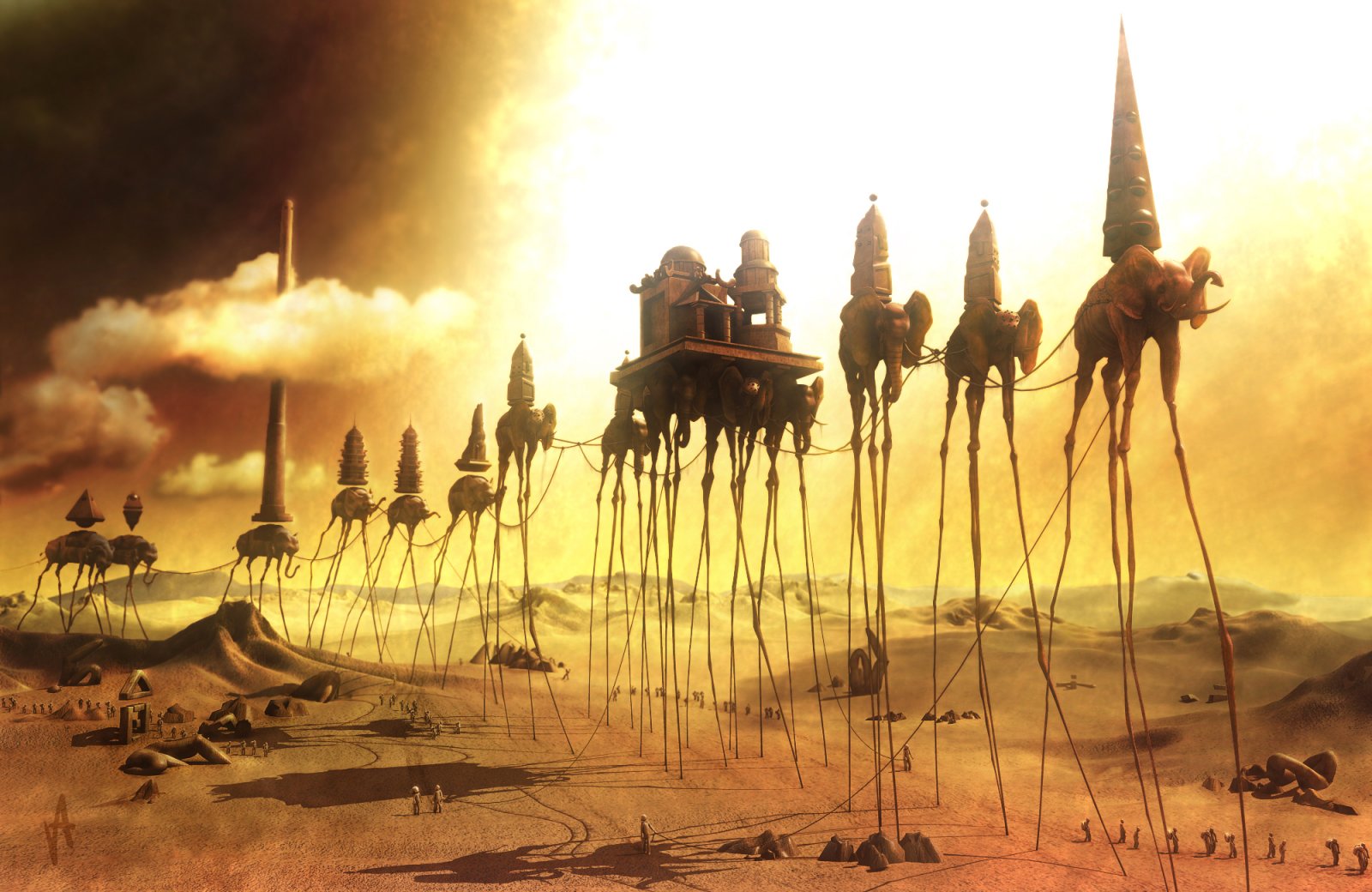
I enjoy surrealist artwork, and its capability to invoke the imagination beyond the realms of the everyday. Nicholas Roerich is one artist who I have previously discussed, accomplishing this internal provocation skilfully. One problem I identify with most role-playing game products and the artwork therein (my own included) is an adherence to safe genre tropes. A guy with a sword looks like a guy with a sword. When writing, surrealist artwork, particularly those pieces produced in the early 20th century, seem to violate my safe and well-worn boundaries, challenging me to consider something fresh. I think good artwork will do this: it requires a response. That can sometimes be uncomfortable to confront because a response is fairly inevitable. For instance, what do I do with the painting below?

Salvador Dali - Corey Ryan Walden

I can either dismiss it as foolishness, I can accept it as a wonderfully imaginative piece, I can accept parts of it (like the concrete nature of the ship, but dismiss the fanciful aspects), or allow some other kind of response entirely. The point is, I have to respond. What's great about artwork is that it expresses something I may or may not have considered myself. And that is good. The artwork I will be discussing today is that of Salvador Dalí (1904-1989). His work, like the best artwork, demands an immediate response. But more so, it is transcendent of the laws and normalities of mundane existence. It is not "fantasy", but it is. A purpose of fantasy is to transport the consumer to other realities, to offer vision of possibilities not otherwise accessible, and to critique and explore the world around us (I could offer numerous citations for this, but I don't want to bore you). The reason D&D has been so popular since its inception is surely the phantasms it offers the participants. One is not bound by reality, thus there is a metaphysical and metaphorical transcendence to the whole affair. I don't want to get too wanky about the whole thing, but it can be powerful. A game can be impossibly funny, or it can be mind expanding, or it can be fucking boring, but I'm interested in the potential it offers the players. It is ritual at its best. Here's another of Dalí's:

I could place this scenario within a sandbox pretty easily. When I think of an encounter with a "statue" I do not think of this, though clearly I should! This would make an interesting encounter. Maybe this was once a giant, rent into pieces by a godling, turning to stone as the next morning dawned. This is creepy, but it's very interesting. Finding some moss covered westernised statue of a king is lame by comparison. I am literally stealing this idea as an encounter within a hex. I have to do a bit more work to determine what exactly happens, but maybe it is merely a point of interest.

The next piece, like the last, can only be described as fascinating. And, like the last, it is immediately applicable within a game.

Look how lovingly he tucks the inside bit/himself into bed! These things need to be in my game. Of course, if you're playing in a world filled with elves and dwarves and whatever, these may not fit (or they very much may). But I need them in my game. Read the facial characteristics of the subjects. The standing banana skin looks intelligent, considerate, and gentle, while the interior looks content and peaceful. How might these creatures reside in the world? What are their allegiances, and who are their enemies? It takes the idea of a banana hammock to another level (sorrynotsorry). 

This next piece is a cross between a beholder and a mindflayer. This is probably the invention of a deranged wizard. Are the flaming giraffes a species? Maybe they are illusions or maybe they are the dreams of a dying god. 

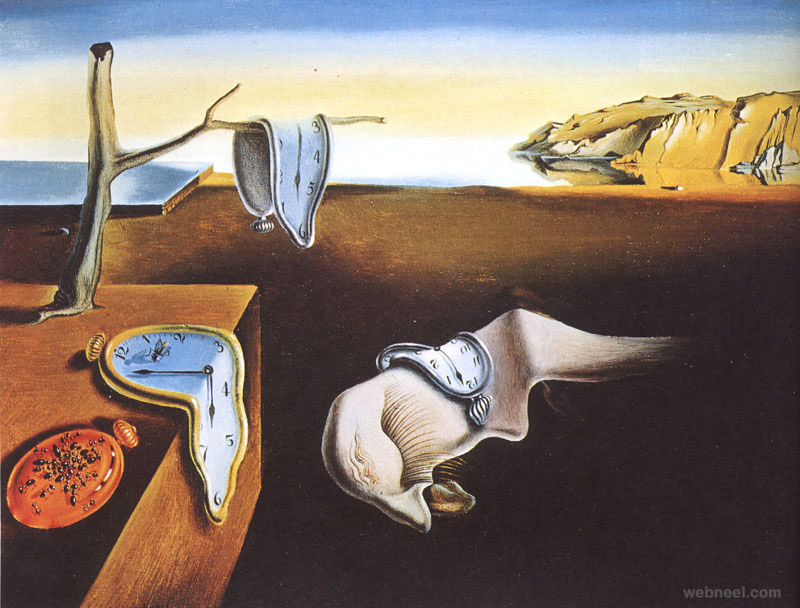
Finally, I will leave you with a few more pieces that have inspired me. The important thing, I suppose, is to be open to what the piece is saying. This is why I always try to remember and record my dreams. They are strange and (obviously) phantasmagorical; strange stuff happens, but it makes the best inspiration for interesting games.


Sunday, 16 August 2015

Praise for Tombstone

Writing can be a largely solitary (and at times, isolated) activity. My initial motivation for formally creating Tombstone was to produce a fun, simple Wild West I could play with my friends, and a rulebook with art I liked. Most of the time I create products which are received with little feedback. Here and there people may comment that they enjoy something, or that they'd like to try it, or compliment some aspect of what I have done.

I was feeling a little jaded last night, but I got this lovely email out of the blue:

"Hi Corey,

I just wanted to let you know that I downloaded your Tombstone alpha rules and printed out the book and read through it. I really like what you've done.  I've tried several of the wild west games out there (Coyote Trail, Shotguns and Saddles, Blood & Bullets, Boot Hill, Wild West Cinema, and others I am likely forgetting) but your game really works for me. I love the simplicity and how easy it is to add house rules to. I'm greatly looking forward to the finished product. I really like the game and can't wait to see it in the finished form. I liked it enough that I ordered the actual print book from lulu after we played. I think we are going to give it another go on Sunday.I'm even considering running this for my regular face to face group a week from Sunday. Keep up the great work!"

These little moments keep me motivated and inspired. Thank you!

Monday, 27 April 2015

On Artwork And Inspiration: The Works of Nicholas Roerich

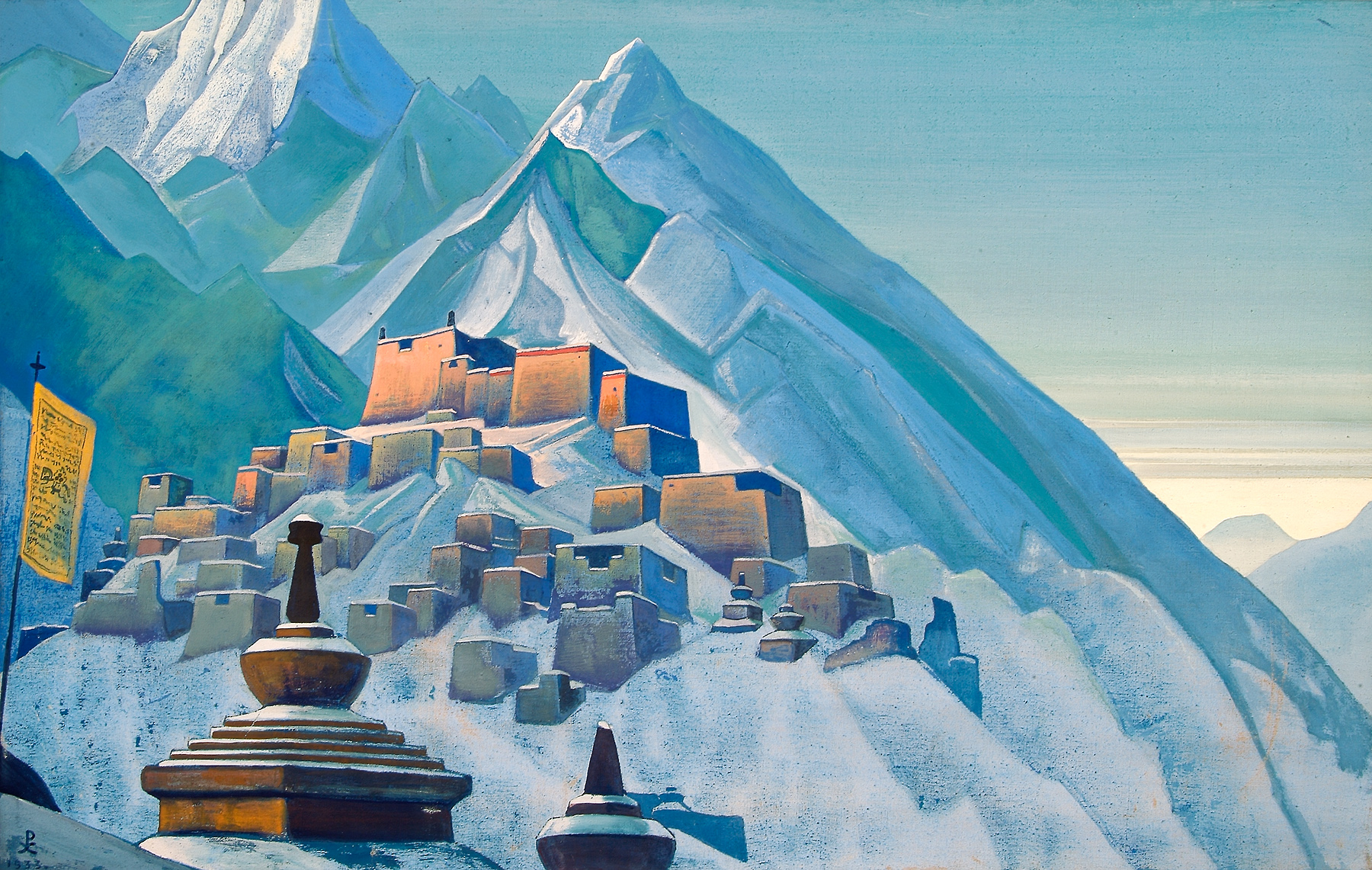
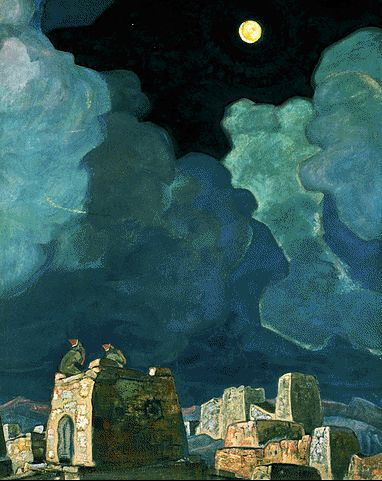
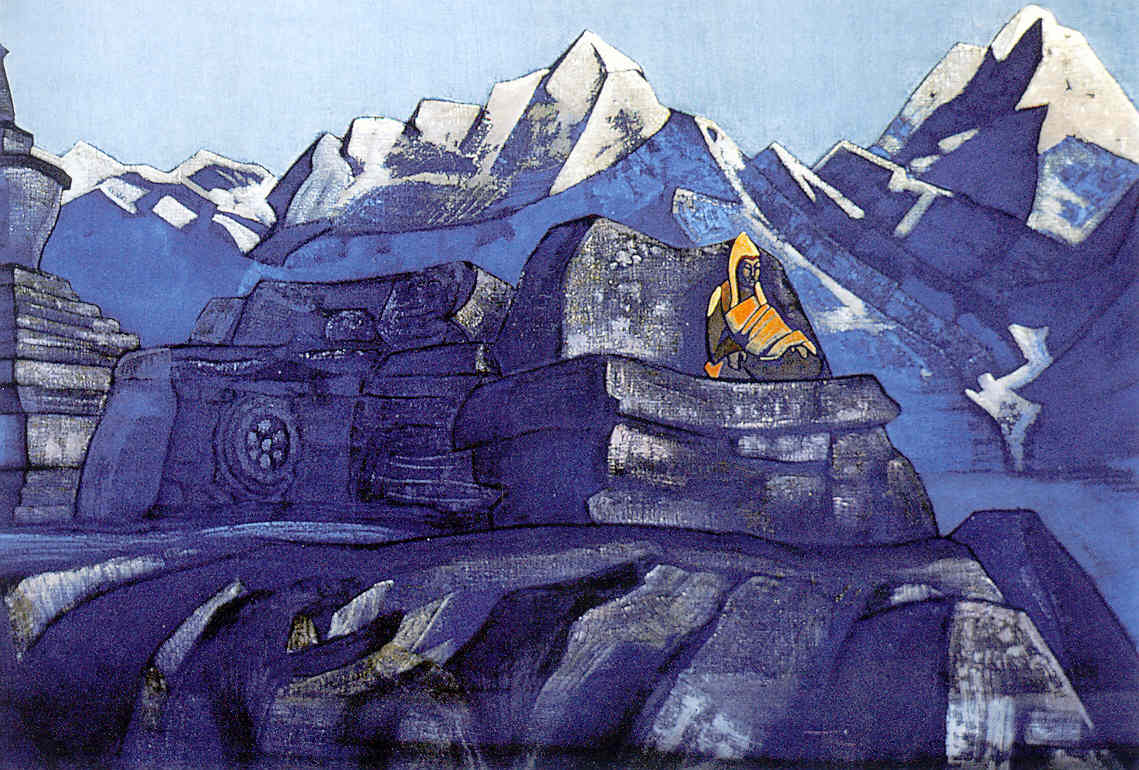
Delving into the work of H.P Lovecraft revealed to me the work of Nicholas Roerich. It would appear Lovecraft had fondness for his work, or at least considered it somewhat evocative in the creation of his own works. He cites it at least twice in his sprawling tale At the Mountains of Madness, referencing the likeness between Roerich's paintings and his own 'Cyclopean' cities. That Lovecraft was an important literary inspiration to Gygax and Arneson should also not be overlooked*.

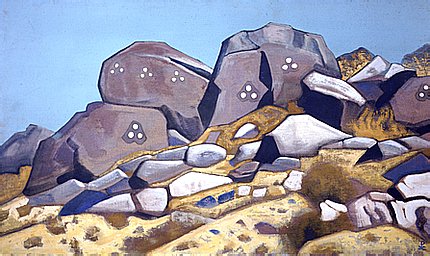
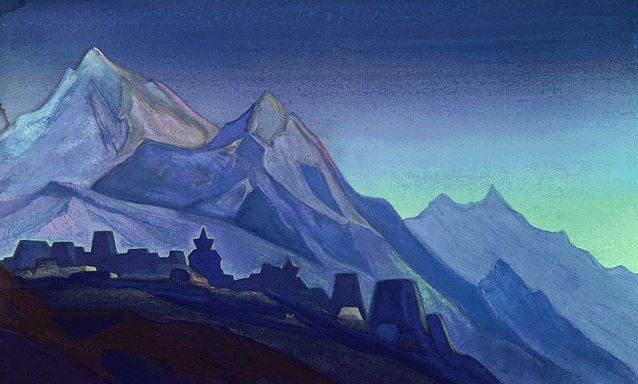
An Internet search demonstrated what Lovecraft was discussing with promptness, and in no small way helped me to visualise the megalithic black cities he referred to. While I personally find a good piece of artwork quintessential in the formulation or muse of my own writing, I feel the linkage is ephemeral rather than concreted in any discrete permanency. That is, I often find myself becoming inspired by a piece, but what begins as a visual appetite may continue in an imagined context, becoming more than the original image alone. The new piece of writing (hopefully) transcends the original piece of artwork that inspired it, becoming its own thing. The pieces I have included in this article may all contain hints as to what Lovecraft spoke of, yet no singular image mirrors exactly what I see in my mind's eye. And I think this exact distinction is important: namely that imagery and writing should assist one another, yet neither should be relied upon.

The work of Roerich in particular amasses a brilliant use of colour that I may call vivid or bold. Were these same paintings reproduced as sketches I doubt they would hold the gravitational pull I currently feel towards them. It is the uncanny representation of reality through colour and shape that I admire, in many respects mirroring a similar relationship between 'reality' and the gamed fantasies we indulge in. Our gaming worlds are somehow more vibrant or outrageous than those we may otherwise occupy, yet evocative of something strangely substantial, though often difficult to quantify.


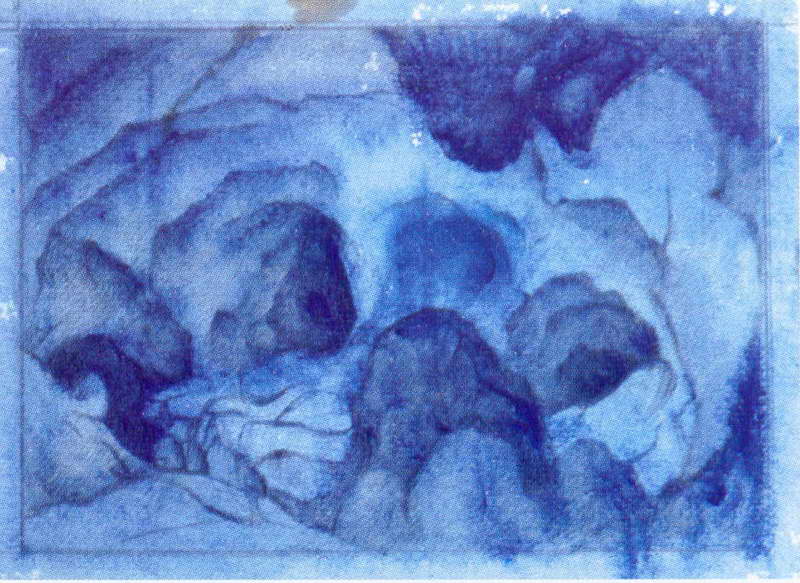
Whether a painting of a natural cave networks conspires to amount in the creation of the 'Old Ones', or simply becomes the lair of a purple worm I see a epiphytic relationship between the two creative forms of art and writing. Most of my favourite fantasy role-playing games have artwork that somehow transports me from here to there ('there' being that other place where one thinks to themselves 'Yes! I want to travel there. But how?').The same goes for a particularly potent piece of literature. The imagery can be so sharp, and the atmosphere so poignant that I indeed travel to 'there'. Likewise fantasy role-playing games are nothing without the atmosphere they conjure, and quite frankly without sincere atmosphere I'd rather not play. 


Life is too short to play in games where the atmosphere is anything but electric. A game, I feel, should inspire you to some kind of vicarious experience. It's not really up to me to determine what that is, or what that may look like, but if I'm playing a game I want to experience something! One reason I particularly like Roerich's work is that each piece hints at a cosmic greatness or peculiarity just outside of reach. Lovecraft's work hints at this too, and is probably why he elected to specifically name Roerich's artwork in his tale. Again, I think a good game will reflect this metaphysical tale: it may be a struggle with self or others, a struggle with the seeming futility or ambivalence of the world, or even the relationship between mortal 'man' and a greater being. Or you may just want to hack some monster to death (maybe on some level that monster stands in the place of something else, or maybe it doesn't). 

That lucid and liminal space between a boring old tale and something that truly inspires is a worthy pursuit, and luckily there are many excellent gaming companies that attempt to tell a 'new' tale. I for one do not want to play the same game everyone else is playing - I want to play the sort of game that me and my friends want to play. The idea of someone else writing my adventures has always been a discomforting thought, and I think it's because the creation of a tale is such a sacrosanct act. I don't mean that in a weird way, I just mean it's pretty damn cool I can sit down with my friends each week, pull out some whacky-looking dice and create literally endless tales with a few rulebooks and some imagination. The best part? We're creating these narratives communally, but in our individual minds they look distinctly different to each person playing. At least I think they do...

So then, let artwork inspire you, but let it be a springboard towards something different or more rarely, something greater.


* Check out Jon Peterson's Playing At The World (2012).